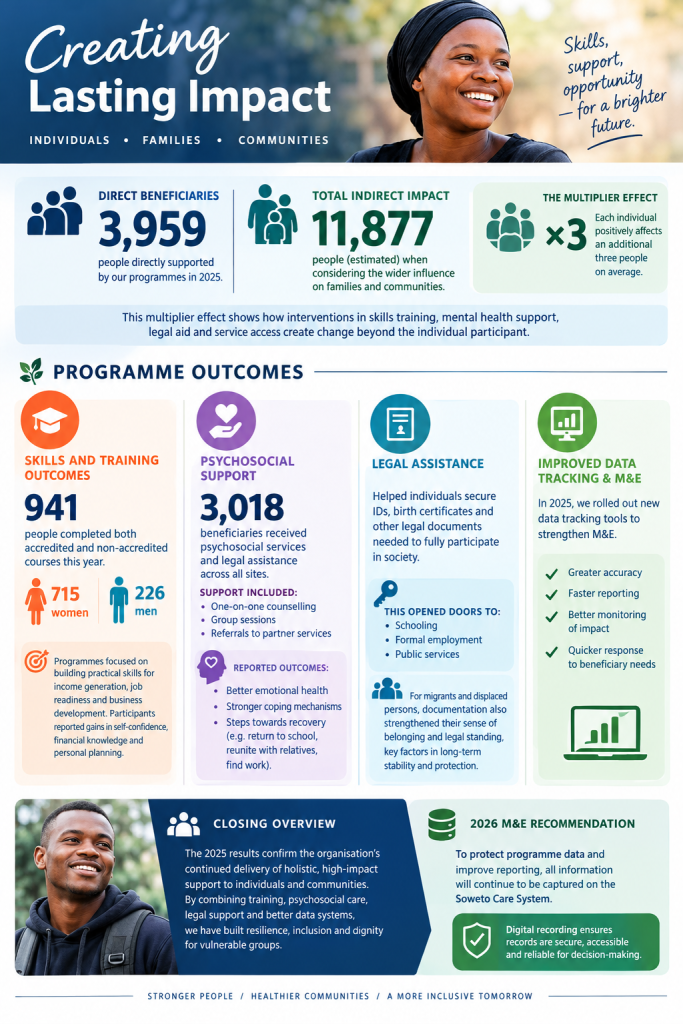
During 2025, our programmes directly supported 3,959 beneficiaries. Considering the wider influence on families and communities, with each individual estimated to affect three additional people on average positively, the total indirect impact extends to approximately 11 877 people. This multiplier effect shows how interventions in skills training, mental health support, legal aid, and service access create change beyond the individual participant.
Skills and Training Outcomes
941 people completed both accredited and non-accredited courses this year — 715 women and 226 men. These programmes focused on building practical skills for income generation, job readiness, and business development. Participants reported notable gains in self-confidence, financial knowledge, and personal planning.
Across all sites, 3,018 beneficiaries received psychosocial services and Legal assistance. Under psychosocial support, they addressed issues such as trauma, gender-based violence, and emotional hardship. Support was delivered through one-on-one counselling, group sessions, and referrals to partner services. Reported outcomes include better emotional health, stronger coping mechanisms, and concrete steps toward recovery. After these interventions, several clients returned to school, reunited with relatives, or found work.
Legal assistance remained essential in 2025. Teams helped individuals secure IDs, birth certificates, and other legal documents needed to fully participate in society. This support opened doors to schooling, formal employment, and public services. For migrants and displaced persons, documentation also strengthened their sense of belonging and legal standing, key factors in long-term stability and protection.
In 2025, we rolled out new data tracking tools to strengthen M&E. These systems improve accuracy and speed up reporting. As a result, we can now monitor impact more effectively and respond faster to beneficiary needs.
Closing Overview
The 2025 results confirm the organisation’s continued delivery of holistic, high-impact support to individuals and communities. By combining training, psychosocial care, legal support, and better data systems, we have built resilience, inclusion, and dignity for vulnerable groups.
2026 M&E Recommendation:
To protect programme data and improve reporting, all information will continue to be captured on the Soweto Care System. Digital recording ensures records are secure, accessible, and reliable for decision-making.